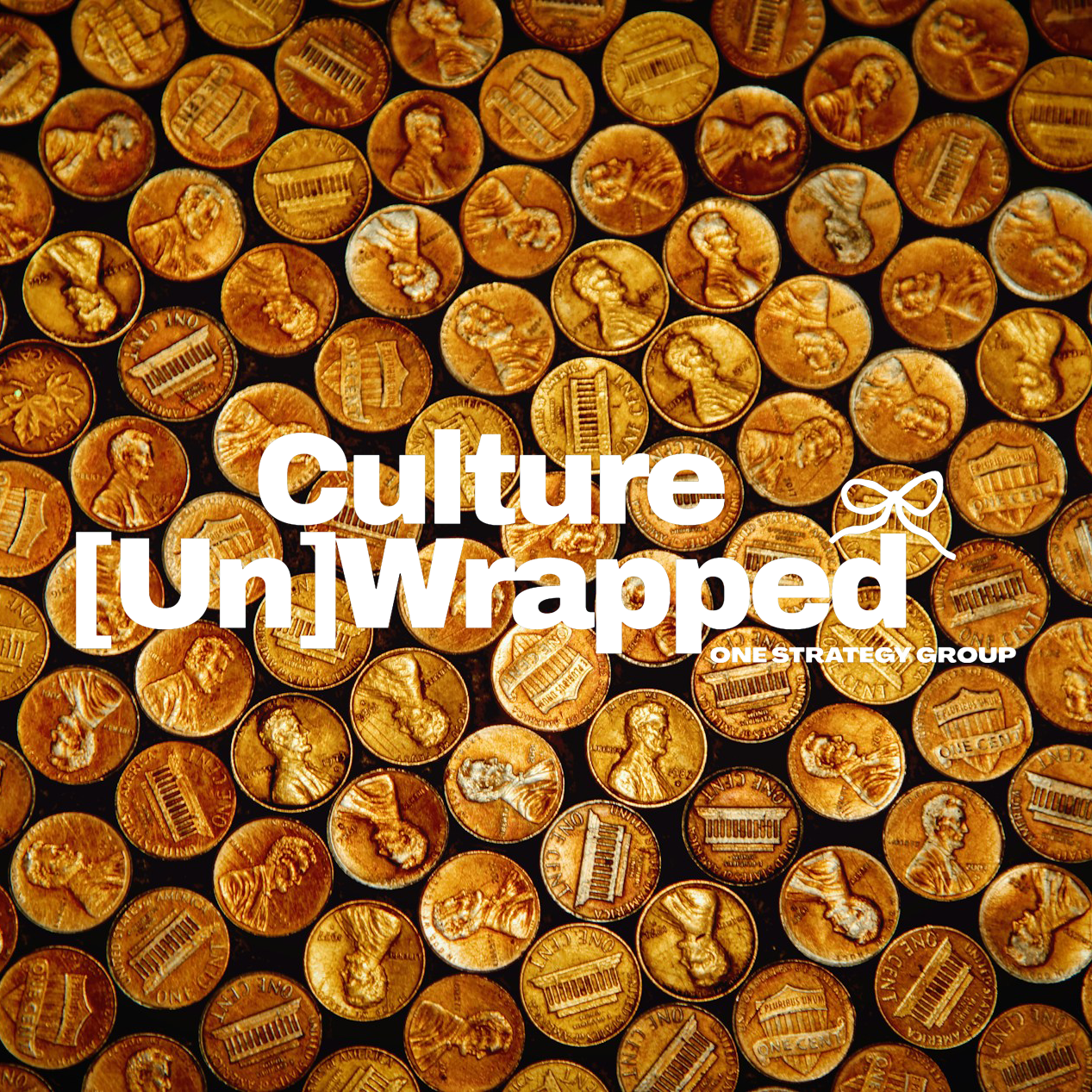
This week we wave goodbye to the penny, ChatGPT creates echo chambers, a new report shows what consumers want from brands on social media, and more.
The Culture [Un]Wrapped Newsletter is published every Friday. To receive it via email, subscribe here.
TRENDING
The last penny has been printed
The U.S. Mint ended production of the penny this week in Philadelphia, closing the era for America’s longest running coin design. The penny is believed to be the most reproduced piece of art in history, with about 300 billion pennies currently in circulation. Its design evolved from the first 1793 coin featuring a long-haired woman symbolizing liberty to the introduction of Abraham Lincoln’s likeness in 1909. Source: Fast Company
U.S. expected to cut tariffs on coffee, bananas, and more from Latin America
The U.S. plans to eliminate tariffs on bananas, coffee, beef, and certain apparel and textile products from Ecuador, Argentina, El Salvador, and Guatemala, aiming to ease consumer prices and resolve legal uncertainty from reciprocal tariffs. The move, announced jointly with the four countries, follows an executive order in September. Treasury Secretary Scott Bessent said we will see “substantial announcements” over the next couple of days, and that will bring prices down quickly for these items. Source: The Wall Street Journal
TECHNOLOGY
Neurodiverse workers say AI is helping them succeed at work
A study from the UK’s Department for Business and Trade found neurodiverse workers were 25% more satisfied with AI assistants and more likely to recommend them than neurotypical respondents. Many of the tools are used by neurodiverse individuals for guidance and task management, where clear instructions are especially helpful. They report that AI is helping level the playing field at work by offering support that aligns with their needs. Source: CNBC
47,000 ChatGPT conversations show the reasons people turn to chatbots
More than 800 million people now use ChatGPT each week, and a Washington Post analysis of 47,000 publicly shared conversations reveals how users interact with the tool. Over one in ten chats involved abstract or philosophical questions, and many users shared deeply personal details in emotional exchanges. The analysis also found that ChatGPT often mirrored users’ perspectives, creating a kind of personalized echo chamber by agreeing far more often than it disagreed, beginning responses with “yes” or “correct” almost ten times more frequently than with “no” or “wrong.” Source: The Washington Post
BRAND
A new skincare brand for kids that “families can trust”
The $4.7 billion Gen Alpha beauty market, driven by influencers and the rise of “Sephora kids,” is receiving backlash as BEIS founder Shay Mitchell steps into the space with Rini, a skincare and beauty brand for children. The dermatologist-tested and EU-compliant line launched with hydrogel sheet masks meant to be safe, fun and teach kids gentle self-care. Some parents love the focus on cleaner ingredients, while others are pushing back, worried the brand is marketing beauty routines to kids who are far too young. Source: Inc.
The toy brand seeing growth similar to Palantir and Nvidia
Sharon Price John has led Build-A-Bear Workshop from near-bankruptcy to one of the stock market’s best-performing retailers, with shares now roughly 50 times their pandemic low. Since taking over in 2013, she has made nearly every store profitable, expanded the brand’s reach to adults and newborns, and leveraged intellectual property for new content and themed bears. Her focus on experiential retail, attention to children’s creativity, and strategic licensing deals have helped the company thrive despite the retail apocalypse and pandemic challenges, positioning Build-A-Bear as a resilient player in the toy industry. Source: Bloomberg
SOCIAL
What audiences want from brands on social media in 2026
A new Meltwater Digital 2026: Global Overview Report found that brand videos are now the most valuable engagement asset after a company’s website, with 25.4% of online audiences watching a brand-made video in the past month. This aligns with the over 6.5 hours the average internet user aged 16 and older spends watching short-form content like Reels and TikToks. With 72.3% of social users turning to these platforms for brand research and 22.6% following influencers, brands that fail to pair their owned social content with strong influencer partnerships risk losing ground in 2026. Source: AdAge




